Blogs
Ground Mounted Solar Panels UK Installation & Effective Planning
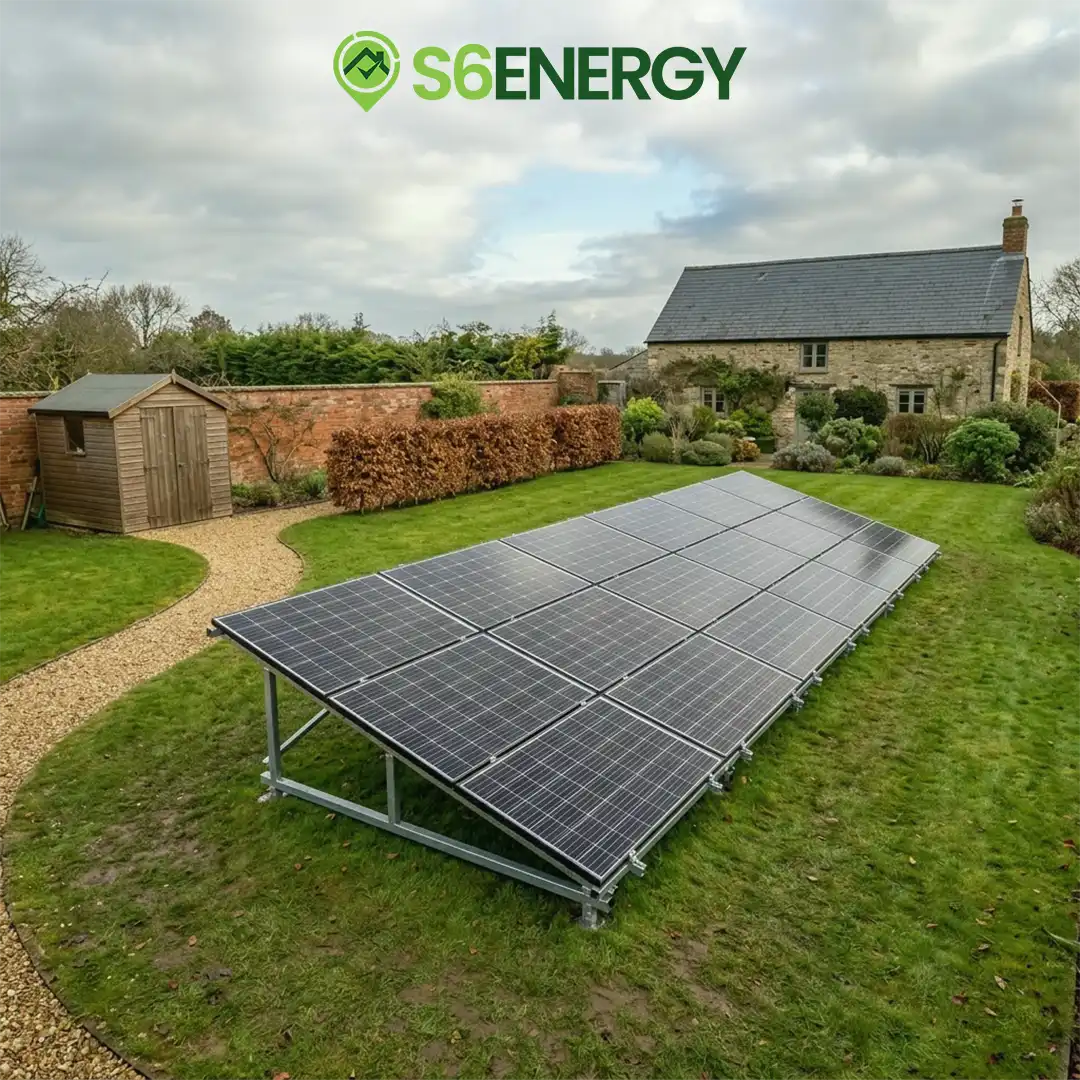
Ground mounted solar panels can be easily installed on the ground, and homeowners don’t have to face the hassle of installing them high on the roof. These panels are the easiest solution to generate renewable electricity at home.
If the roof is not suitable, a ground-mounted solar system is an effective solution with flexible compatibility and can be positioned according to your requirements.
This system can easily increase generation and is a popular option for homes that have big gardens and spare land.
Most homeowners probably think rooftop panels are the only solution to generate energy. A well-designed solar system provides you with excellent performance for long-term energy goals and installation methods.
In this article, you will learn about ground-mounted panels and their operation and cost in the UK.
What are ground mounted solar panels?
Ground-mounted panels can be easily installed with their framework; you just have to fix it on the ground and install the ground-mounted panels.
The solar panels work similarly to a roof-mounted system. Both of these systems have one difference, which is the mounting structure, because they are designed to support panels for positioning or angles to produce maximum energy generation annually.
If you have spare land, then this is a great opportunity to install this flexible mounted system.
Types of ground mounted solar panels
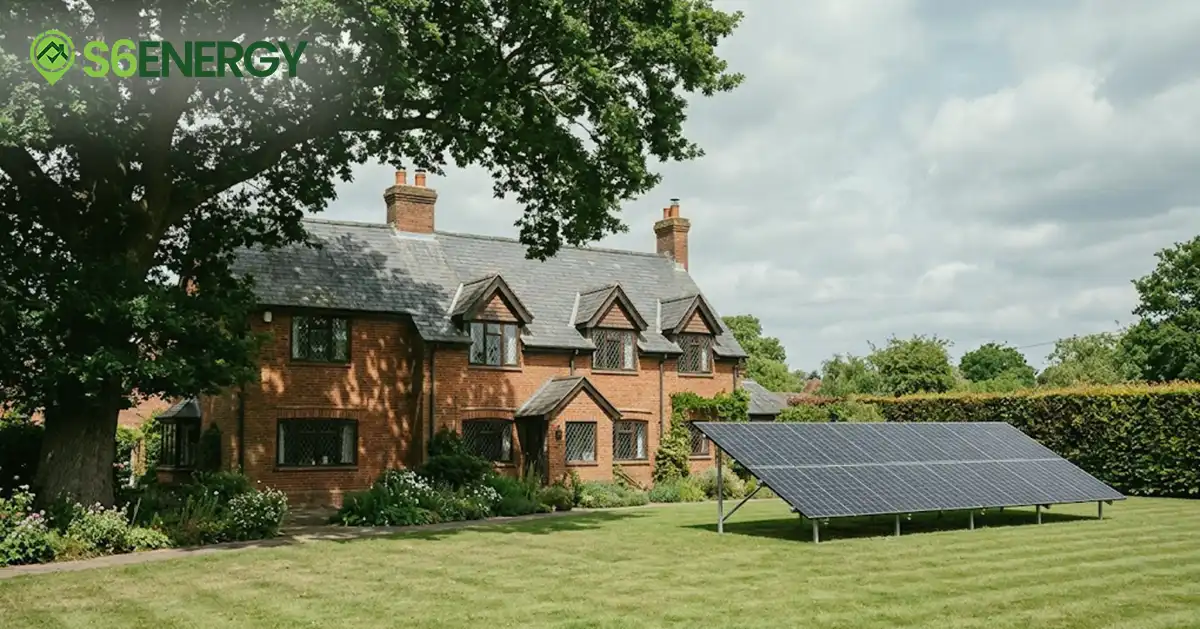
Two types are the major right mounted and pole-mounted; both panels are available.
Rack-mounted panels
- These panels use metal frames which drive them into the ground to hold the panel system at an accurate angle. They support a riser to be adjusted manually according to the season and sunlight angle.
- They are simple to install
- Cheaper in price
- Easy to maintain and flexible to adjust
- They are expensive. As well as less efficient compared to Pole-mounted panels with few options for solar tracking.
Pole-Mounted panels
- These panels can support multiple panels and elevate them higher off the ground. They can adjust or tilt automatically to capture the optimal amount of sunlight. These panels can produce 25% more electricity when you add a tracking system to monitor your solar array.
- It takes less space than other mounted panels.
- Are more efficient than rack-mounted panels and have auto-tracking functionality
- Easy to upgrade
- A bit difficult to maintain. As well as harder to add more panels in future.
When are ground mounted solar panels a good choice?
A ground-mounted system is a perfect alternative solution to rooftop-mounted panels. As well as being an excellent solution, with more considering worth if:
- roof has limited sunlight
- neighbouring buildings, trees or chimneys cause shading
- not enough space on the roof
- You need flexibility over panel positions.
If you are looking from an installation perspective, then the biggest benefit is the array, which is needed to achieve a favourable angle for solar generation.
Your panel position must be accurate according to sunlight; then the system can easily generate excess electricity, which is the best option for the home.
If you want to have a perfect ground-mounted system, then think about how it will be worth it for your outdoor space in future.
All kinds of solar systems are a long-term investment, so inspect and get a recommended one.
How to install ground-mounted panels?
A structure is required to be attached because this module needs it. This will save it and make it more resistant to rain, snow or strong wind.
You have to consider the following:
Assess Ground conditions
If you have soft ground, sloping gardens and other kinds of difficulties, then the ground may need to be prepared before installation. If the foundation is stable, then the system can be more cost effectively work.
Install a metal frame.
A metal frame must be fixed in concrete or on a pole because, if it is fixed or driven into the ground, then it will be the strongest to hold your panels.
Tracking system
Must install a tracking system for solar; it will help you to monitor or track energy production.
Wooden frame
Add a wooden frame because it could be doubled up to support your other structure and shading storage.
Most of the panels can be adjusted; this is beneficial according to the seasonal changes because the angle of the sun changes. So you can adjust according to the sunlight. Solar panels can be arranged in a layout according to the landscape.
The optimum orientation is south in the UK, so you can mount your ground panels according to the south face.
mounting system
You have to consider a suitable mounting system because the whole solar panel depends on it. If the system is accurately mounted, then the panel installation can be more stable at a reasonable cost.
The soil condition and the slope of the land, along with wind, all require stability because it affects more how the array is installed.
You have to inspect the ground and check all the safety measures; then you can choose an appropriate solution to install in your budget.
Long Cable used
Ground-mounted arrays are normally installed at a distance from the property. Long cables are used because they can increase installation complexity.
System size
Check out your consumption needs and system size. The more largest system means the more panels you need to install and the more expense you need.
The larger structures and additional equipment all have the contribution in installation cost.
Easy access
Unlike roof-mounted panels, ground-mounted solar has easy access, even for installers to use equipment, and they reduce labour time.
Inverter or system set-up
You can install the inverter with these panels in a garage or utility room, or in a weatherproof outdoor area. You have to monitor the configured equipment.
Test safety equipment
This is the last step to install ground-mounted panels because you have to test and verify safe operations. You have to check system performance. All documentation must be completed with MCS certification and DNO notification.
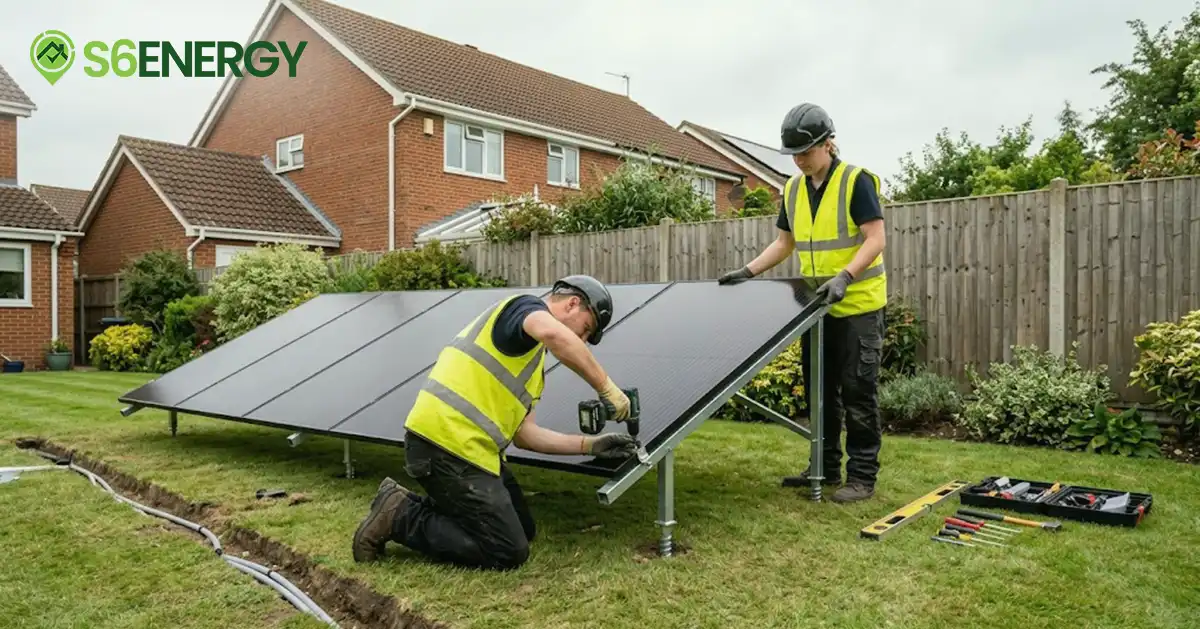
The cost of ground-mounted panels
The cost of ground mounted solar panels is equivalent to roof-mounted systems, and their installation is more expensive to fit in.
The amount of groundwork required is more expensive because both systems have the same number of panels for any home. For instance, if the rooftop panel requires 8 panels for a home, then ground-mounted also requires 8 panels.
Both types of panels have similar work but different mounted method.
The installation cost is similar, but it depends on the site preparation, mounting way or the distance from the property.
| System size | Typical guide price* |
| 3kW | Starts around £7,000 to £9,000 |
| 4kW | Starts around £8,000 to £10,500 |
| 5kW | Starts around £9,000 to £12,000 |
| 6kW+ | Starts around £11,000+ |
Professional installer assessment required
Before having a ground-mounted solar panel installation, it’s important to hire an installer or a professional to assess all available space and the area where you want to install it.
The important considerations are
- Ground conditions
- Distance between property and electrical connection
- Cable routing
- Available land and angle, positioning
- Access for installation with all safety Measures and for future maintenance and repair.
The purpose of the assessment is to provide long-term sort of performance because it has a greater impact in the long term.
If you avoid poor positioning, orientation or unnecessary shading, then this can create a meaningful difference in the electricity generation lifetime.
What kind of ground mounted solar panels UK planning permission are required?
Planning permission is not actually required for ground-mounted solar installations or any kind of system. Here are some rules and regulations, because of some restrictions that are essential to consider for a roof-mounted system.
- installation size
- property location
- properties listed or not
- Height must be more than 4m
If all of these requirements are fulfilled, then there is a need to get permission. All domestic and commercial installations are included. Consent for a commercial ground panel system is always needed because they are approximately 9m2 bigger.
The local council can approve your permissions if you are concern to use undevelop land and agricultural land. Make sure to leave minimal environmental impact when you remove it.
Read More: Do solar panels need direct sunlight?
Ground-mount solar panel VS roof mount
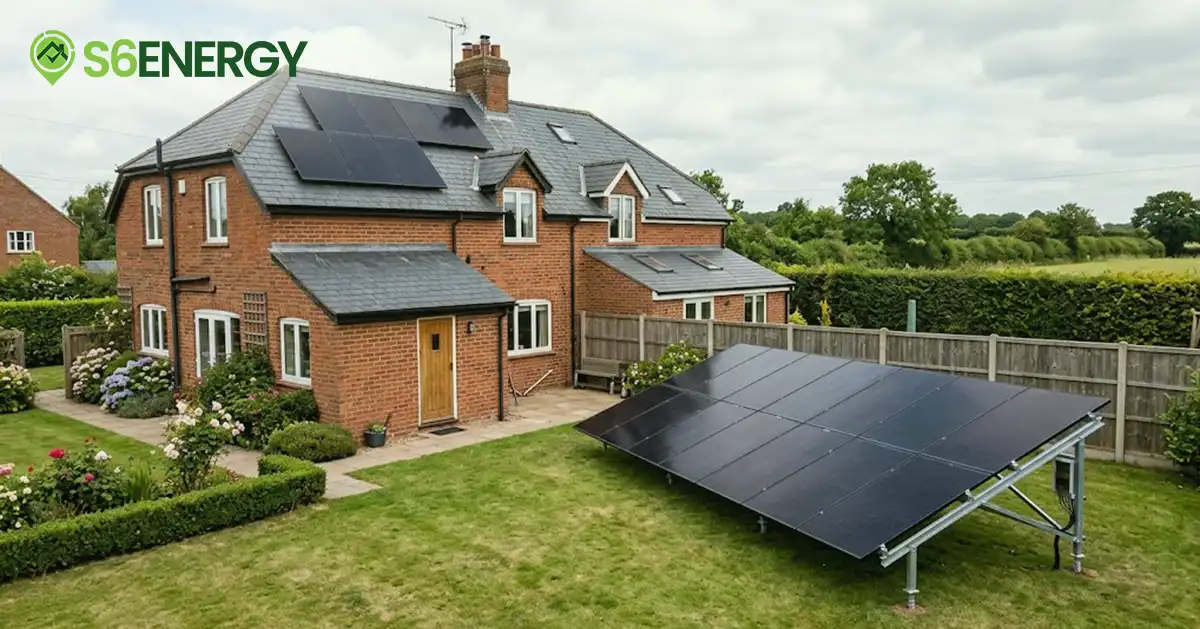
Comparison of both methods: multiple benefits for ground mounted system are considered.
- Rooftop solar panels are restricted according to the angle and orientation or according to the roof size and space. While ground mounted panels have flexibility and can easily adjust according to the angle and orientation. A ground-mounted system is even bigger in size.
- Most roofs are not able to support or fix a solar system. So the ground system is far better.
- These systems are easy to clean and maintain with easy access.
- Grounded systems have more ventilation than rooftop panels, which means they are way better and provide great efficiency. You can extend them easily.
Drawbacks of ground-mounted panels
- You have to place these panel into the agriculture land; however, these panels can be easily raised high on the space where wildlife is below or grazing.
- It is hard to find space without shade in most countryside or any farm.
- Thieves can more easily steal components from these panels than from roof panels.
- The upfront cost is higher because more labour and materials are required to install them.
Rooftop panels have weather resistance or a layer of insulation, but ground-mounted panels don’t.
Can ground-mounted panels work with storage batteries?
Solar panels can easily pair up with storage batteries, just like roof-mounted panels.
When you install a battery, it can store surplus electricity which is generated by panels and help reduce electricity bills.
When you store the excess electricity, it can be very beneficial for your home to use during power outages at night as well. These batteries are cost-effective, and you can choose a better size and capacity according to your home consumption and your needs because they are good for long-term energy goals.
How to maintain a ground-mounted solar system?
Ground mounted solar panels require less maintenance, but you have to check on a regular basis to monitor their performance and production.
Check the dirt and debris on the surface of panels and clean it
Assess the mounting structure and vegetation around the panel
Keep checking the surface for damaged which needs improvement.
After self-assessment, if you see some damage or anything which is not looking fine, then hire a professional to do it.
Common mistakes to avoid during ground-mount installation
Skip the site assessment
Must inspect or assess shading and ground conditions, which matter a lot. If you skip the survey, then it can be worse in future.
Wrong foundation choice
If you do not use concrete pads, then it is dangerous for your whole system to stay in place this week. Use strong clay with a stony ground base to install, because foundation is must to be strong to support the whole system.
No MCS certification
Do not eliminate SEG income because it can be lost over 25 years for 2500 £ to 7500£.
Are ground-mounted solar panels worth it?
These ground mounted solar panels are a long-term investment with excellent performance for homeowners. Who are not have a suitable roof with enough space, these panels are good enough for outdoor space to install an array with optimal positioning and an accurate angle.
- There are multiple benefits.
- Reducing electricity bills
- Reduce dependency on the electricity grid
- Lower carbon footprint and household carbon emissions
- Provide energy independence
The installation cost is higher, but a rounded system makes solar production higher than a standard one.
Ground-Mounted systems provide excellent value and overcome challenges such as limited roof space, poor roof orientation and others. They also provide an effective long-term solution for homeowners to use renewable energy.
Conclusion: Ground Mounted Solar panels
Ground mounted solar panels are a practical solution in the UK, which provide homes with valuable benefits. Ground-mounted panels don’t have any structural limitations because they are the largest system, which needs permission if it does not fulfil requirements and follow some installation steps. After all, they are suitable for your home.
This panel system has excellent options; you can install it in a garden space or on a shaded roof. They are different because of their mounting structure and cable run back. They are the stronger choice, with multiple advantages you have to consider for a garden space with a 35 to 50 m2 4KWP system.
In the UK, Ground-mounted panels have several advantages, which make them the most preferred choice, such as optimal panel positioning, enhanced efficiency, easy to maintain, and easy to access.
There are some simple steps with which you can easily install solar panels with the help of professionals.
FAQs: Ground Mounted Solar Panels
Is it worth it to install ground mounted solar panels in the UK?
Yes, you can easily install ground-mounted solar panels in the UK without any permissions and no need to plan for a ray which is less than 4 to 5 panels. You can easily install on conservation area-listed properties or ground mounts with 5m2 of planning.
What is the cost of domestic ground mounted panels in the UK?
Ground panels typically cost 9000£ to 16,000£ for at least 6KWP. They are around 1000 to 2500£ more than roof panels. The foundation covers the extra cost of long cable runs and heavy frames as well. If you can see a commercial panel, then they are 10 to 20 kWp, from £25,000 or more.
What foundation do ground-mounted solar panels need?
A strong foundation needs concrete. Ground screws are faster, fully reversible, and work in all kinds of ground. All of these the most considered options to have a strong foundation todoeslace a structure to support the panel.
How much space do a ground-mounted panel require?
8 to 12m2 per kWp is required for South facing aray with 35 angle of rotation. 4KWP systems require 35 or 50m2with a shadow-free ground.
Related Post