Blogs
Heat Pumps Advantages and Disadvantages: UK Guide
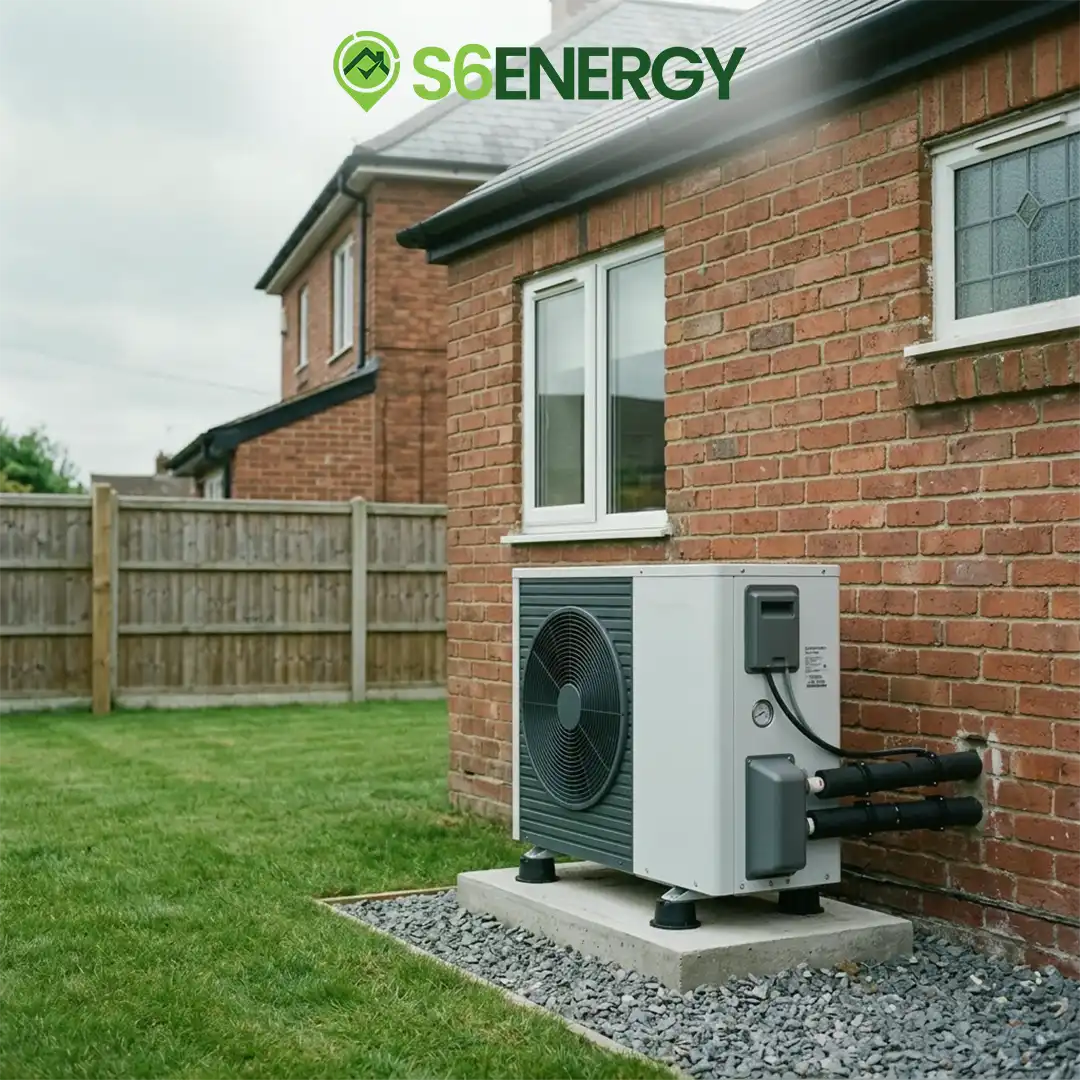
Heat pumps advantages and disadvantages are the most concerning because of their reliance and results.
With the help of gas boilers, more than 17 million households can reduce carbon emissions by tons annually.
Right now, domestic heating erased 14% in the UK for emissions and government legal obligation is to achieve Net Zero by 2050.
If you want to consider low-carbon alternatives, then hydrogen boilers and heat pumps are the solution, which provide your home with more reliable and convenient heating options.
What is a heat pump?
As per the government’s goal in the UK to reach net-zero by 2050, 19 million or more heat pumps have to be installed at home for climate change.
Heat pumps are effective pumps and can transfer heat from one place to another. They can easily extract heat from the air and the outside of the house and then transform it into warm air for your indoor environment.
This is very impressive because they are helpful in winter and when it’s cold.
The heat pump can absorb outdoor air, and then it provides central heating as well. On the other hand, hybrid heat pumps have a viral, which is additional to provide heat when it’s winter season.
These heat pumps need only a small amount of electricity, which helps them operate and combine all the factors that provide heat to the environment. Modern gas boilers can achieve 300% efficiency, compared to heat pumps. You can meet heating demands with heat pumps, but hybrid heat pumps are a better option because they are more efficient and compatible with traditional gas boilers.
Types of heat pumps
Heat pumps come in three main types, each suited to your home’s heating needs and hot water requirements.
- Air source heat pump
- Ground source heat pumps
- Hybrid heat pump
Air source heat pumps
These heat pumps are most common because of their demand in residential buildings in the UK. They are easy to install in any space in your home because they are aligned perfectly with the carbon-neutral goals as well as perfect for your environment.
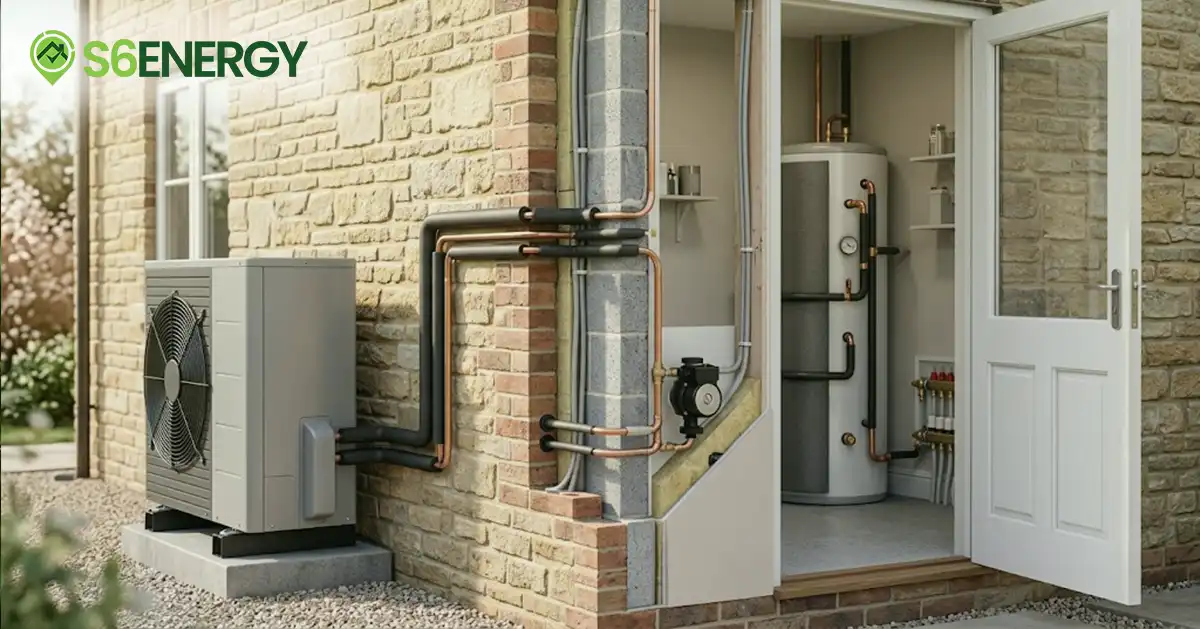
If you want to install them, they need a separate external wall on which to be mounted and absorb heat to provide building heat with a fan.
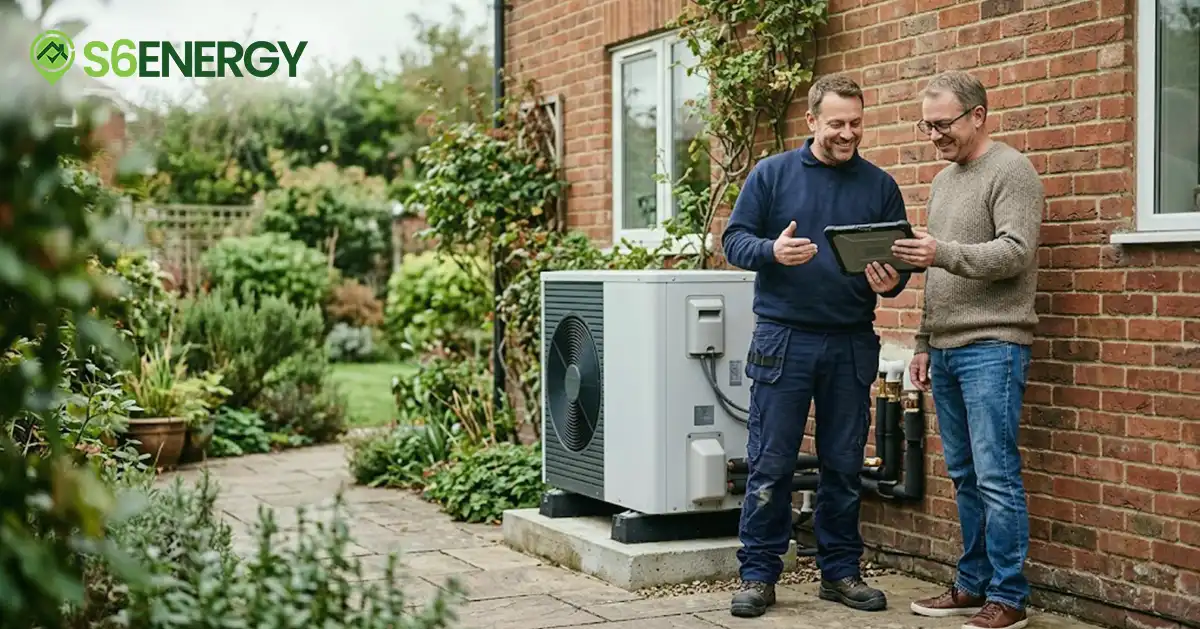
How do air source heat pumps work?
Air source heat pumps are worthwhile as refrigerators, and their condensation and evaporation principles for extracting heat from outside air work for your home.
You can convert your normal energy into thermal energy with it because the opposite direction of normal heat can easily extract the heat from the cold location and provide a warmer one.
Types of air source heat pumps
There are two types of air source heat pumps.
- Air to water system
In this system, you can heat the water with the central heating system radiators; there is an essential role for underfloor heating and heated water storage cylinders. These cylinders can contain and store heated water for a long time.
- Air-to-air system
In this system, you can heat dribbling with fans, which provide cool air as well when it is needed, but are ideal for the summer.
Normally, heat pumps work as air conditioners but in reverse.
Ground source heat pumps
drum or firm can easily extract heat, as the name shows, from the ground.
The ground has a temperature which able to provide more heat than air; this is the advantage and point of ground source heat pumps.
Ground heat pumps are complicated to install because they require large pipes to be installed.
How do ground source heat pumps work?
These heat Farmington training network of pipes because the liquid absorbs heat with a constant
temperature between 10°C to 15. These heat pumps work as a refrigerator, but they are useful as a heat exchanger in the building to generate hot water as needed.
Hybrid heat pump
Hybrid heat pumps are a mature option as well because of the seasonal climate in the UK.
They are a better option in all terms for homes that are poorly insulated with poor thermal efficiency. Fully electric heat pumps can struggle to meet heating demands consistently.
Hybrid heat pumps are simple to install and easy, with good compatibility.
How do hybrid heat pumps work?
Hybrid heat pumps are designed to work with a combination of traditional gas boilers.
They are designed to operate properly and work at 40°C, which is good enough to provide sufficient heat annually.
Hybrid heat pump not considerable on most properties because of their less electrification system. This is because most of the properties are of great value, which requires gas infrastructure, which is expensive.
These heat pumps are modern and good for well-insulated houses where heat pumps can provide proper heat with hybrid options.
Heat pumps advantages and disadvantages
The heat pumps advantages and disadvantages provide you with the reasons for having them or not.
Advantages of heat pump
Low maintenance appliances
All of the heat pumps require less attention to be maintained and less service and repairs than gas boilers. On the other hand, they are very safe and designed with all safety measures, with zero-emission gas. They contain less risk to use.
Grants & scheme
In the UK and Wales, boiler upgrade schemes are available; you can visit s6energy for all information, even in Scotland and Northern Ireland.
Superior efficiency
Their efficiency rating is 300%, but gas boilers have a rating of 90% efficiency.
Low carbon alternative
Household appliances can burn fossil fuels and use electricity. 40% of energy in production in the UK is renewable because they are the better option than gas boilers.
The government issued a legal obligation to reach net-zero by 2050. Everybody has to follow all the requirements, which helps the government achieve the goal.
Provide cooling and heating.
Heat pumps work in reverse: they can remove heat from your home in summer as an air conditioner, but in winter they will heat your home and provide you hated water because they are compatible with gas boilers.
Disadvantages of heat pumps
As you can see they benefits here are some drawbacks which need serious consideration:
High Upfront cost
For ground source heat pumps or hybrid heat pumps, the upfront cost is very high. Committee on Climate Change provides the estimated cost, which starts from 26,000£ which is required for UK homeowners for a local carbon heating system.
Noise level
Air source heat pumps out of unit producing noise while operating. But modern systems are very quite and there is no sound to notice.
Space requirements
Air source pumps need space to place out unit, and there are some problems to install because they need space to install, but not all homes have outdoor space because of planning restrictions.
Running cost
If you have heat pumps in a home and are using them incorrectly with extremely poor thermal efficiency, then running costs can be high compared to gas boilers.
Electricity is higher than gas, and the running economy with electricity cost is 3-15p KWHN the gas is 3-4p per kWh.
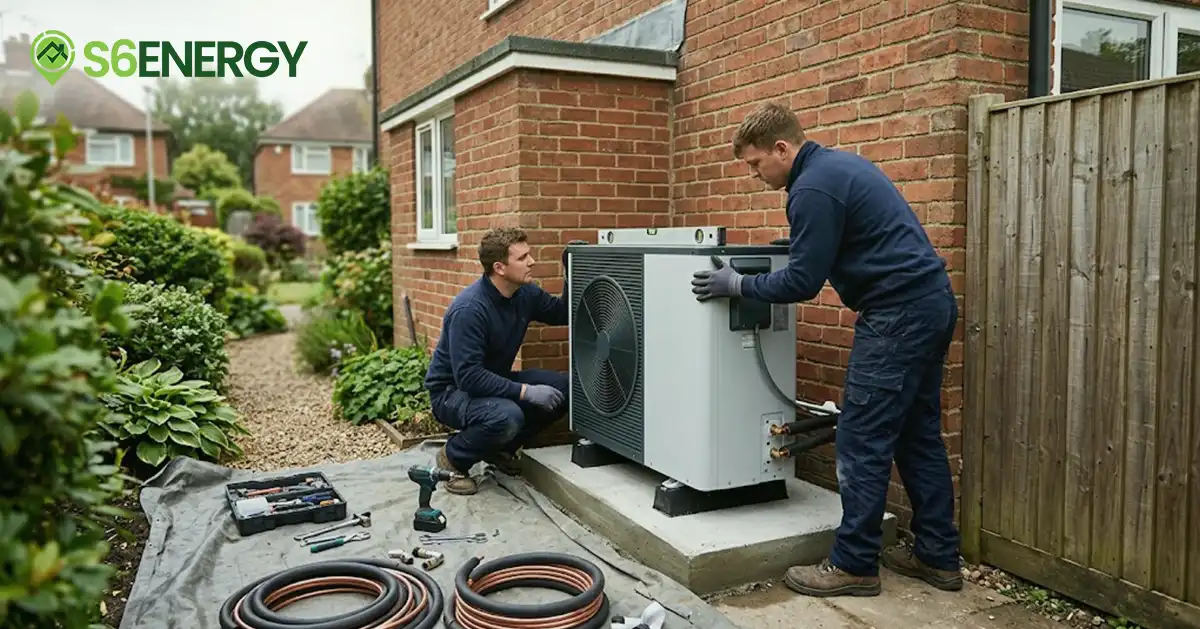
Which heat pump is best for your house?
As there are heat pumps advantages and disadvantages which depend on different factors such as
- Budget
- Size
- Your residence home plot
- Your home insulation and thermal efficiency
Ground source heat pumps are best in all conditions because they can provide a consistent level of heat.
They are expensive and require land to install, but they are preferable if you can handle the budget and land together.
In the UK, standard air source heat pumps are compatible with your home if you have a free external wall for installation.
If your home is old and poorly insulated, there is no need to worry because hybrid heat pumps are the best option, even if you have structural reasons.
Heat pump cost
Heat pumps are expensive to install; their initial cost is also dependent on their model, size, and need. An air source pump starts from 8000£ to 14,000£. Grand head pumps start from 18,000£ to 35,000£. There are different schemes which are available on the commercial sites given by the government because of their achieving their target by 2050.
| System type | System cost ** | Energy source being replaced | Annual approx. running costs | Annual saving *** | Break-even point |
| Air-source | £6,500 | Oil | £1,800 | £1,000 | 6.5 years |
| Air-source | £6,500 | LPG | £1,250 | £450 | 14.4 years |
| Ground source | £17,500 | Oil | £1,800 | £1000 | 17.5 years |
| Ground source | £17,500 | Liquid gas LPG | £1,250 | £450 | 38 years |
Conclusion: Heat Pumps Advantages and Disadvantages
If you are interested in investing in a heat pump for your residential building or home, then there are several heat pumps advantages and disadvantages which are associated with all safety concerns.
Heat pumps can provide fantastic output because they can be a wise investment if you consider the right model and your demand.
They are a system which can move heat from one place to another by using compressors and a circulating structure, including liquid, gas, refrigerant, and ground as well.
The types of heat pumps are decided based on the compatibility of your home because well-designed and efficient systems get fantastic results, because ukulele commitment is to achieve net-zero by 2050.
In the UK, the government has set the goal to achieve so they provide incentives and while updates games as well. If you want to see eligibility, you can go on the website to check. Heat pumps provide larger capacity for heating and cooling than electrical energy. Their efficiency rate can cause 400% as high as it can be.
Read More: Solar Panels VS Heat Pumps
FAQs: Heat Pumps Advantages and Disadvantages
Are heat pumps good or not?
Heat pumps are highly recommended because of their efficient system to provide heat for your home and workplace. There are some advantages and drawbacks. Energy efficiency is the best advantage of heat pumps.
Is an air source heat pump a good choice for you?
Yes, an air source heat pump is the right one to install and the best choice for your home because of some factors. Such as a home in installation, current heating system, available space, local climate, and long-term plans. But make sure to consult a professional or expert.
How does a heat pump work?
Source heat pumps need a liquid, which is known as a refrigerant, to control the movement of heat in the evaporation and condensation process. Ground heat pumps can absorb heat from the ground and turn it into heat or cold, depending on the season. They work in rivers to provide your home with comfy vibes according to the climate.
What are heat pumps advantages and disadvantages?
Heat pumps advantages and disadvantages include different factors.
Advantages:
Low-maintenance appliances.
Grants & schemes are available.
Superior efficiency.
Low-carbon alternative.
Provide cooling and heating.
Disadvantages:
High Upfront cost
Noise level
Space requirements
Running cost
Related Post