
Retrofit underfloor heating is a trending choice for owners for upgrading existing homes and properties. Therefore, traditional radiator systems are different from retrofit under-floor heating because of the consistency of the warm floor to maintain it.
With a low-profile modern system, you can easily install underfloor heating in an old property as well. Minimal destruction can occur while making it attractive during renovation and other refurbishment projects.
A detailed retrofit assessment by S6 Energy ensures underfloor heating is compatible with the existing property structure, insulation standards, and future energy efficiency goals.
What is a retrofit under-floor heating system?
Retrofit under-floor heating is a system that is designed for installation in existing homes and properties rather than new ones. These heating systems are manufactured to work with a limited edition in the floors of the existing structure. Floor insulation is a part of underfloor heating as well. With this system, you can heat the floor with proper instructions and no extra edition required to maintain it.
Experts usually install it with a proper system and guide you to inspect it properly.
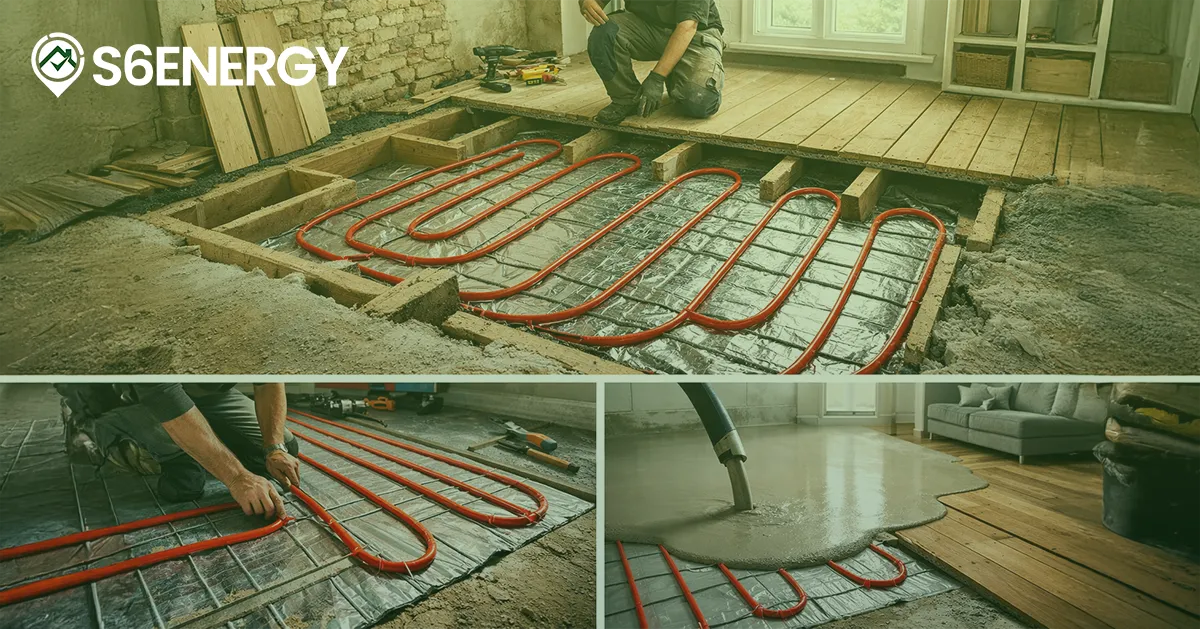
What is a retrofit under-floor heating
Types of the best retrofit under-floor heating
Retrofit under-floor heating managed the temperature according to the settings, which helps to make the whole system consistent. Water-based and electrical heating system are both help insulation to be strong and effective.
Water-based system
In this system, warm water goes upside down in pipes under the floor. It is unique because of its modular design. It also offers quick installation with a perfect refurbishment project.
Electric heating system
In this system, heating mats and cables are used. Electric floor heaters are trending and considered ideal for retrofitting in renovation projects for homes. Furthermore, low-profile designs in electric systems indicate that they do not impact the floors.
Why retrofit heating system important
This improves the comfort of thermal with the distribution of heat across the home. It helps to lower the temperature and, more preferably, the internal radiators, with which you can improve energy efficiency.
Moreover, removing wall-mounted radiators is more useful because it takes low space and enhances design flexibility. Retrofit under-floor heating is important because it maintains the floor and home temperature with a comfortable environment.
Is retrofit and heating good and possible in existing properties?
Yes, this is possible in existing homes, all kinds of older and new homes. Low-profile technology with advanced systems can make it more feasible, including installation.
Factors which affect feasibility and floor construction, floor height, insulation levels, and the existing heating system. You can see professional services to determine the most effective retrofit solutions.
Types of homes for best suited for retrofit under floor heating
For installing under floor heating system, there is a range of property types which include:
- Flats and apartments
- Old homes
- Timber floor
- Solid floor
- Ground floor and upper floor
- Undergoing renovation of homes
Scale of renovation needed for retrofit under-floor heating
The requirements depend on the system, but some of the retrofit systems are manufactured to be installed on the existing floor.
- Extensive renovation VS light
- Light renovation
- This renovation overlay with less disruption
- Extensive renovation
- For floor replacement and for the insulation upgrades
If you are thinking about renovation for the best energy efficient dating solutions, then retrofit under for heating contributes to a comfortable and more energy efficient environment.
Ufh systems are amazing solutions to connect your Central heating system for circulating warm water beneath your floors.
Replace or modify the existing floor structure.
Modification and replacement of existing structures are important to achieve optimal energy performance. Including adding solutions and leaving space for Pipe work.
Overlay VS floor replacement system:
Low-profile overlay systems prefer digging shop floors and are easier to fit. These can easily lie on existing flowers and are 15 mm with minimal floor height. Moreover, overlay is expensive but can be quickly installed. This system can minimise disruption.
Floor replacement system and types of floor
Floor replacement system provides an option to install higher insulation performance solutions, including upgrading the system accordingly.
Low-profile retrofit under floor heating system
Low-profile under for heating systems are designed for different retrofit projects, with a height of most. Therefore, the systems involve pipes with thinner layers or using electric heating mats with slim layers, which have to reduce height.
The following factors are helpful for a low profile retrofit under-floor heating:
- Minimal increasing levels in the floors
- Quick installation
- Preferably for existing homes
- Solid floors and concrete floors
Solid concrete floors
Retrofit under-floor heating concrete floor is needed for strong insulation, which helps to reduce heat loss and also good to install this insulation before installing the heating system.
Overlay systems
They are the most efficient solution, which minimises heat loss. If you are searching for the best overlay system, then you have to consider the best and most important for your renovation project, but the UFH tool helps you to decide what’s best.
Timber floor
Timber Joisted floors are a range of multiple options which are available for underfloor heating systems. This can be evenly installed between joists for best insulation and for retrofitting floor heating.
Joists floor
It also minimised disruption. To consider this kind of floor heating for the joist floor, you have to consider assessment and improve the insulation levels to control heat loss. This kind of insulation prevents heat loss.
Overcome underfloor heating challenges in retrofits.
These projects can face multiple challenges with a floor limited in height. The solutions can be different and useful, and also help to make sure about the reliability of eating performance with efficiency. Some solutions are common and effective.
Self assessment
Assessment and inspection are the number one steps to move further because whenever you inspect or assess your home, including big stones which are used, then you can notice any repairs and other requirements to improve the heating system.
Low-profile system solution for a retrofit heating
For insulation, you have to prefer the most effective and high-performance installation. Try to consider smart controls and smart zoning.
Ufh system solution
This is also the most considered solution. Laminating flooring is also possible to install, but the materials for piping for retrofit heating systems are based on specific products, which also depend on budget and the place where they are available. High-performance doors and glazing windows are also a long-term and common solution which is more effective.
Installation process of the underfloor heating system
This type of flooring requires removal and also affects the project duration.
Initial assessment
Initial assessment helps owners to check the required are which needs repairing and what kind of insulation is suitable for the floor heating. If your floor is made with concrete stone, the insulation will be different, but for the timber and joists, it will be the same.
Planing
Planning is a helpful thing with which you can plan whether the system performs effectively after installation or not. And also, you can decide on the system whether the water-based system is worthwhile or the electric one, including height and insulation levels.
Preparation and insulation
Subfloor preparation and insulation is inisstial and important. Floors should be cleaned and well levelled. For timber floors and solid floors, insulation is based on the level. The insulation can be easier for the joists to fit in between.
Installation of floor heating system
- Water-based systems are easy to install in the pipes and connect with the main controlling system, which controls the flow levels.
- Electric heating is possible with mats and cables, which are easy to connect to the entire system.
Controlling source
Appropriate systems are connected with the central controlling source. Water systems are mostly connected with boilers and heating pumps to control the system. The electric system is connected to the thermostat.
Testing
Before using the entire system, testing is the most important element. For a water-based system, check the pressure and leakages. For the electric system, check the temperature and maintenance first. The most important things to test are heating consistency and insulation.
Factors that affect the retrofit heating
Retrofit underfloor heating Cost.
Multiple factors are here which effect under floor heating costs. The retrofit underfloor heating price depends on the system type; it can be electric or water-based. Total floor area is also required; preference is for the portion that is required to be overlaid.
Condition of the subfloor
Insulation requirement, as we discussed already, insulation is the best way to prevent heat and make the entire home a comfortable and warm environment.
Installation complexity is the major thing, but for retrofit under-floor heating, this can be easy.

Retrofit underfloor heating system
Cost of retrofit heating system
Retrofit cost for heating costs is different by location, but also depends on the size of the property where it is required to be installed. Moreover, electric systems have a low cost and are more often work at small places. Electric systems are most probably working more efficiently.
Water-based systems normally involve installation cost but these are considered expensive depending on the spaces. If the spaces are large in size, then these are cost-effective.
Room cost considerations also vary by location and area. If you are using it for the bathroom and kitchen, then because of the small spaces, it is good for heat attention with a good effect.
Compatibility with boilers
For this kind of heating system, it is possible to connect with a range of sources, including different gas fillers and multiple technologies like year-round source heating pumps. Due to low temperature, it has a good compatibility with modern systems.
Future-proofing a heating system
For installing a retrofit under floor heating system, it is good to set the energy efficiency controls with smart controlling remotes and zoning. Moreover, the compatibility with the energy system is very helpful for the future due to changing energy standards.
Maintenance
These under-floor heating systems do not require more maintenance. Therefore, water-based systems require inspection, but electric systems do not require inspection. The thermostats required improvement to control temperature and efficiency to perform better.

Retrofit-underfloor heating – s6energy
Conclusion
Retrofit under-floor heating is the most effective solution to maintain comfort and energy efficiency in existing environments. Including all modern profile systems, the possibility of installing underfloor heating with less disruption, in historical houses and new one has limited floor height is considered. Furthermore, single-room or large one renovation projects required consistency to improve spaces according to compatibility with modern technology.
You can explore the installation process, cost factor, flour finishes, and compatibility. Honours can make decisions to align their future goals. Whenever you properly plan and do installation, then retrofit under the floor heating system helps you to enhance comfort with complete long term for with good efficiency.
Read More: Radiant Floor Heating
FAQs
How much to retrofit underfloor heating?
Cost to retrofit underfloor heating in the UK has different factors, which include system type and size, the area where you have to install it, and what is the floor level requirements.
How to retrofit underfloor heating?
Installers install this type of floor insulation beneath the floor to make the home warm. The water system is mostly attached to radiators and boilers. Another is electric, which is directly attached to wires. Once it is installed, the finishes cover the floor with tiles and stones.
Does retrofit under-floor heating raise the floor height?
Yes, the addition of a retrofit under-floor heating system raise hight just for few mm. But with low-profile it can be easily adjusted and maintain the floor level.
How impactful is it for old homes?
Yes, if you do the assessment properly and the insulation is installed properly, then it will be worthwhile for the old homes.
Why retrofit heating system important?
For most of the homes, it is worthwhile to maintain home comfort and energy efficiency, including multiple advantages, which can be space-saving and make the home warm according to the weather demands.
Table of content
- What is a retrofit under-floor heating system?
- Types of the best retrofit under-floor heating
- Why retrofit heating system important
- Is retrofit and heating good and possible in existing properties?
- Types of homes for best suited for retrofit under floor heating
- Scale of renovation needed for retrofit under-floor heating
- Replace or modify the existing floor structure.
- Floor replacement system and types of floor
- Overcome underfloor heating challenges in retrofits.
- Installation process of the underfloor heating system
- Factors that affect the retrofit heating
- Cost of retrofit heating system
- Compatibility with boilers
- Conclusion
- FAQs