
PAS 2035 is a document that sets out good practice for a product and its services. It’s required for urgent market needs. Retrofitting PAS-2035:2023 increases energy efficiency.PAS-2035 Work on the Framework of the entire house to improve retrofit projects – Work on assessment, coordination, and designing, including evaluation. However, helps people in the UK to achieve energy goals by Carbon reduction, Fabric-first outcomes, Long-term safety, and lower energy bills.
A publicly available specification, which is a type of developing collaboration among different industries and companies’ stakeholders, is published by BSI.
What is PAS 2035?
PAS 2035 was started in 2019 by the UK government to improve energy efficiency in existing homes and buildings. Retrofit helps to develop more energy efficiency. Energy-efficient dwellings require less energy for generating heat through gas, oil, and electricity. And the outcome shows the result as low energy bills and carbon emissions. Most energy-efficient homes are comfortable to breathe with less cold and heat loss.
Therefore, the retrofit approach uses the outline of a building. Initially, it’s important to inspect the property to ensure safety. Retrofit projects need to work with some factors, including fabric, insulation, ventilation, and sustainability for long-term processing, and these are helpful to consider.
For a professional assessment tailored to your property, get a comprehensive retrofit assessment from Retrofit Assessment S6Energy UK.
Why was PAS 2035 introduced in the UK?
PAS2035 started to respond in 2019, and every home dropped a review. After knowing the failure reasons, the government asked to avoid following that scenario in the future for the betterment of the state. The government always imposes policies for the nation and the state’s good development in a manner.
The inspectors also check the reports to determine whether the homes are completely inspected and assessed by the assessors and work on repairs and insulation.
Role of PAS 2035 in the UK
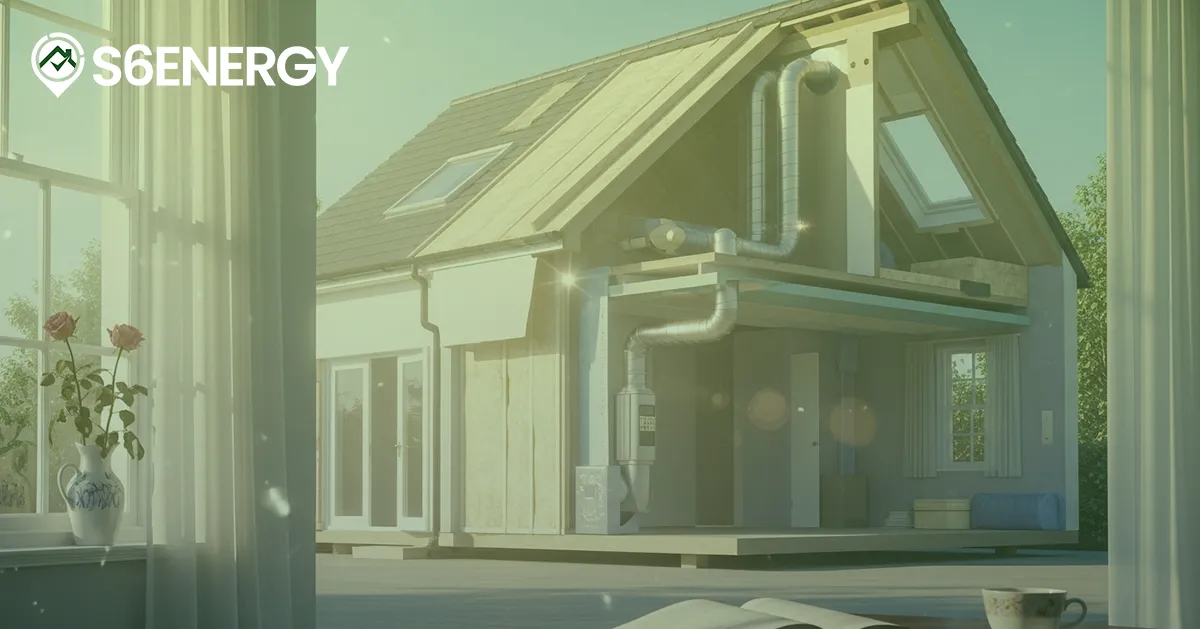
PAS2035 for the UK retrofit strategies to make sure that retrofitting always improves the quality of a property, improves energy efficiency, and reduces carbon emissions. Furthermore, with the help of this entire building approach, it has to reduce moisture and control it, improve ventilation, and insulation. Including it reduces the risk of sudden consequences and incidents, and leads to the services.
PAS 2035 UK
Complete guide to PAS 2035 retrofit
Retrofits are developed to update properties and buildings to make them more efficient. These are designed for the careful implementation of energy efficiency.
This process involved evaluating properties in their current conditions and also addressing any different retrofit needs to make sure that everything is installed correctly. A whole-house approach is considered for risky assessment for improvements.
Moreover, PAS uses a holistic approach to make sure that it is very beneficial for the properties and buildings for long periods.
Measuring examples are :
- Wall, floor, and loft insulation
- Windows and doors for energy efficiency with multiple glazing
- In heating systems, for more renewables
- Draught proofing, for smaller and larger measures
- PV for renewable electricity
Publicly available specification understandings
PAS is playing an important role in connecting emergent companies, industry needs, and other standards. It allows for quick development orders to be implemented as soon as possible to make sure that companies and industries can address challenges and technologies.
What is the PAS-2035 good practice establishment?
PAS 2035 introduced the process of inspection and assessment to improve the measures for individual homes. In this, the Risk inspection is involved to make sure that all the measures are completed safely.
The report, after all that assessment, shows improvement plans or home retrofit plans. Therefore, different important components are involved, which are required for the assessment to be performed after retrofit installation. A fabric-first approach is implemented here for reducing the risk of an inappropriate environment.
How does it reduce risk?
Insulation and air tightness are the most valuable to reduce the building risk of heat loss and energy consumption.
It mostly supports the building’s energy efficiency and maintains moisture with zero mould and structural problems.
Benefits of PAS 2035
PAS-2035 is important for professionals to continue delivering retrofit projects according to the measures. And beneficial as:
- Carbon reduction
- Fabric-first outcomes
- Long-term safety
- Lower energy bills
Here is a concept of Accreditation for experts who carry the certificate for working and are qualified to assess, and designers can design accordingly. Certification is helping all the workers to do this project with high standards.
PAS 2035 helps implement the approach for a long period to achieve success in the retrofit project. This ensures health maintenance and consistency to reassure clients that retrofit is completely energy efficient and safe, with quality measures.
Fabric first retrofit approach under PAS-2035
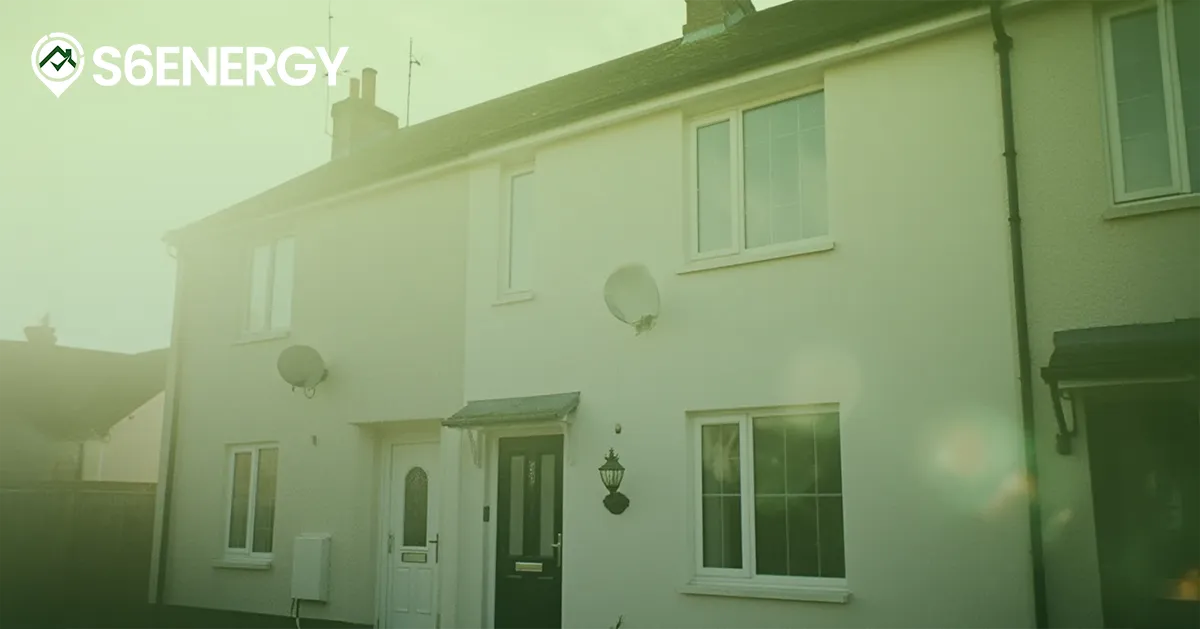
This approach is a principle to follow in PAS-2035. And helpful to improve the envelopes such as Walls, roof, floor, and doors. Fabric-first approach and changing of fabric helps to reduce energy consumption and its demands as well as prevent heat loss.
- Inspect the home, check the repairs, and deal with dampness
- low-energy bills and replace the old ones
- Improve the remote controls for temperature maintenance
It can tackle, and it will be an environment and upgrade the fabric of the building further, and install.
PAS 2035 UK Homes
Roles for delivering PAS-2035
Roles and responsibilities are :
Retrofit assessor
The retrofit assessor assesses the energy efficiency of a dwelling and collects information about the structure and heating system, which controls the efficiency. Moreover, retrofit assessors pass all information reports to the retrofit coordinator.
Retrofit coordinator
PAS-2035 retrofit coordinator plans the improvement implementations for the next 25 years, and all of this plan is based on the report, which provides information from the retrofit assessor. Key point to notice, not all the coordinators followed the assessors’ assessment report; some of them did an inspection on their own for good results and better improvements.
Retrofit designer
The designers design a package called bespoke to measure the energy efficiency, including insulation and potential interaction.
Installer
The installer installed the retrofit, and an inspection of energy efficiency was done according to PAS 2030, 2019. Therefore, this installation covers the projects with handover parts. These retrovert installers should carry their certification as trust mark providers because it shows that having competent and experienced installers.
Air tightness plans and targets
It is important to make the building design according to preventing air leakage with a strategy, and also to manufacture according to a tightness, and this target strategy.
Ventilation
Ventilation is an important element to add to your property for the maintenance of temperature and a comfortable environment. Some additional things are indulged, where the quality improves, and it works effectively.
PAS-2035 and PAS-2030 Compliance
PAS-2035 is not a certificate; it works on the framework to maintain risk assessments and solutions. PAS2030 is the compliance certificate to achieve success in a profitable retrofit project.
It collaborates with others for the perfect output. It involves the complete structure, which is under assessment for better solutions and perfect safety measures. Several plans can be improved to execute a retrofit with the focus on correct installation.
PAS-2030 and PAS-2035 Collaboration
This collaboration is because both of these are designed to work together. On the other hand, PAS 2030 was developed to focus on quality for better installation procedures. At the same time, PAS-2035 makes sure that the retrofit is completely appropriate for any building and property.
Both PAS are working on the retrofit projects for proper execution and maintaining the building’s life for the long term.
Difference in PAS-2030 and PAS-2035
Comparison Table
| Feature / Aspect | PAS 2030 | PAS 2035 |
| Purpose | Installs for the purpose of energy efficiency measures (EEMs) in the existing homes properly and safely. | Work on the Framework of the entire house to improve retrofit projects – Work on assessment, coordination, and designing, including evaluation. |
| Scope | Installation, quality-improving management, competency, and methods. | Retrofit process assessment, design, and coordination in risk management and evaluation. |
| The approach | focuses on energy efficiency upgrades. | Entire house, risk-based, and fabric-first approach for interactions between measures. |
| Who It Applies To | Installers, contractors, and designers who work on retrofit projects. | Retrofit Coordinators, Designers, Assessors, and Evaluators work to manage the project. |
| Certification | Installers can carry a certificate of PAS 2030. | PAS 2035 is a standards framework that is helpful in projects. |
| Documentation Required | Quality Management System, including installation records. Furthermore, compliance evidence. | Retrofit assessment reports, whole-house improvement plan, design specifications, and evaluation records. |
| Roles Defined | Well-qualified installers | These are Assessor, Designers, and Coordinators, including Evaluator and Advisor. |
| Risk & Building Condition | Installation quality matters for the safe side | Before and after the retrofit installation, risk inspection, and performance check are important. |
| Ventilation & Moisture Control | According to the Installation and guidelines | Requirements for ventilation, airtightness, and moisture management are necessary as design needs. |
| When Used | For energy efficiency measures during installation | Framework used from assessment through evaluation. |
| Relation to Funding Schemes | Government-funded work as ECO. | Compulsory for government-funded domestic retrofit schemes and other project compliance. |
Conclusion
PAS 2035 in the UK is working to improve energy efficiency in all existing homes and buildings. To set out a standard for the project, make sure all of these projects are delivered with complete design and assessment, along with coordination. The impact of 2035 on energy efficiency is profound.
It helps to make sure that retrofit projects identify the energy conservation measures in existing homes that are able reduce carbon emissions and energy bills. Moreover, it also maintains indoor comfort and moisture in the air with excellent durability.
PAS 2030 manages the installation and energy efficiency as an individual, but PAS2035 is a guideline that manages risk-based work, such as roof, wall, door, and window glazing. When we mix up both standards, then the outcome represents the result of updating fabric-first for long-term home security and insulation safety.
FAQs
Is PAS-2035 mandatory for UK existing homes?
Yes, because government funding of domestic retrofit projects is working for an energy-efficient environment and carbon emissions, so it is mandatory.
When was PAS-2035 introduced, and why?
It was introduced to inspect the bad qualities of retrofit in different schemes. Also, make sure the energy efficiency and proper assessments, design, and coordination for avoiding different insulation and retrofit problems, such as condensation and heat loss, including overheating.
Explain the fabric-first approach under the PAS-2035?
The fabric-first approach is helping to work on building envelopes for improvement involving the roof, floor, windows, and doors. It uses energy consumption and also prevents moisture from deteriorating the long building life and its performance.
Who took the responsibility for delivering PAS-2035 projects?
Responsibility of the project’s retrofit assessor, coordinator, and designer installers, each person is responsible for doing work properly and managing as well.
Is PAS 2035 possible to apply to all types of buildings?
These apply to existing buildings, which can be homes, flats, or other properties. All the retrofit designs are built for a 2-day building construction.
Is the PAS-2035 certificate for experts?
No, it is not a certificate; however, experts should be well-known for their roles and responsibilities for installing according to the past 2030 standards to measure.
Table of content
- What is PAS 2035?
- Why was PAS 2035 introduced in the UK?
- Role of PAS 2035 in the UK
- Complete guide to PAS 2035 retrofit
- Publicly available specification understandings
- What is the PAS-2035 good practice establishment?
- Benefits of PAS 2035
- Roles for delivering PAS-2035
- PAS-2035 and PAS-2030 Compliance
- PAS-2030 and PAS-2035 Collaboration
- Difference in PAS-2030 and PAS-2035
- Conclusion
- FAQs